Ingrown hairs develop when a hair grows back into or beneath the skin instead of emerging normally from the follicle. They can cause small raised bumps, redness, tenderness and irritation and are particularly common in areas regularly shaved or waxed. For some people, they become a persistent problem that returns every time the hair regrows.
At Empress Lasers, we use professional laser hair removal to help manage recurring ingrown hairs by targeting the hair at the follicle and progressively reducing future growth. As hairs become finer and less frequent, there is less opportunity for them to become trapped beneath the skin, helping to reduce the cycle of shaving, regrowth and recurring irritation.

Ingrown hairs are often associated with shaving, waxing and other methods that repeatedly remove or cut the hair. As the hair begins to regrow, it can curl back towards the skin or become trapped beneath the surface rather than growing outwards normally. Coarse, curly or tightly curled hair can be particularly susceptible, although ingrown hairs can affect many different hair and skin types.
Repeated ingrown hairs can leave the skin looking inflamed and uneven and may lead to persistent bumps or changes in skin colour after the inflammation has settled. Rather than repeatedly dealing with individual hairs after they become trapped, laser hair removal focuses on reducing the underlying hair growth responsible for the problem.
Laser hair removal works by directing controlled light energy towards the melanin within the hair. This energy is absorbed and converted into heat within the follicle, damaging the structures responsible for producing new hair growth. Over a course of treatments, progressively more active follicles can be targeted, reducing both the amount of hair and the thickness of subsequent regrowth.
Because hair grows in different stages, multiple sessions are required to target follicles during their active growth phase. A typical course consists of 6 to 8 sessions spaced around 4 to 6 weeks apart, although individual treatment plans can vary. As regrowth becomes finer and less frequent, there are fewer hairs capable of becoming trapped beneath the skin, which can significantly improve recurring ingrown hair problems over time.


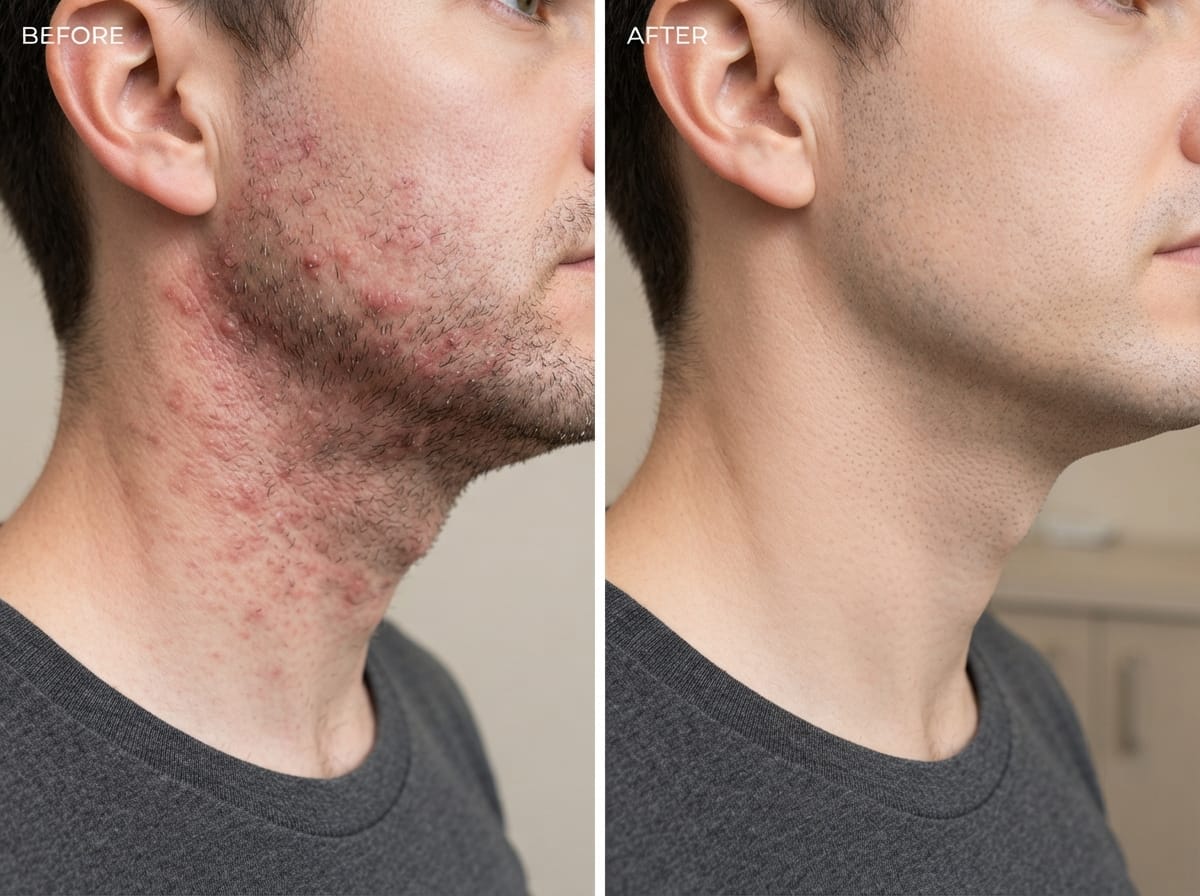


Ingrown hairs can occur anywhere that unwanted hair is regularly removed, but they are particularly common in areas where the hair is coarse or the skin experiences frequent shaving and friction. Picking or attempting to extract individual hairs can further irritate the area and potentially damage the surrounding skin.
Laser treatment can provide a more manageable long-term approach for people who regularly experience ingrown hairs by significantly reducing the amount of hair returning to the treatment area.
Common treatment areas include:


Ingrown hairs are extremely common, particularly in areas that are regularly shaved or waxed. Below, we answer some of the most common questions about why they develop and how laser hair removal can help reduce recurring problems.
Ingrown hairs occur when a growing hair becomes trapped beneath the skin or curves back into it rather than emerging normally from the follicle. Shaving, waxing and other hair-removal methods can contribute to the problem, particularly when the hair is naturally coarse or curly.
Yes. Laser treatment reduces hair growth at the follicle, meaning fewer hairs grow back and have the opportunity to become ingrown. This makes laser hair removal particularly useful for people who experience recurring ingrown hairs associated with unwanted hair growth.
The main purpose of laser treatment is to reduce the hair growth responsible for recurring ingrown hairs rather than physically extracting individual trapped hairs. Your practitioner will assess the area and advise on treatment if the skin is currently inflamed or irritated.
Laser treatment can be used across many areas where ingrown hairs commonly occur, including the face, neck, underarms, legs, bikini area, intimate areas, chest, stomach and back. Suitability will be established during your consultation.
A course of around 6 to 8 treatments, generally spaced 4 to 6 weeks apart, is typically recommended because individual hairs move through different growth cycles. Your treatment programme will be adjusted according to the area, your hair growth and your response.
Yes. The treatment area should normally be shaved 24 to 48 hours before your appointment. Do not wax, pluck or epilate the hair beforehand because the follicle needs to remain intact for the laser to target it.
This depends on the condition of the skin. If an area is particularly inflamed, broken or shows signs of infection, treatment may need to be delayed until the skin has settled. Your practitioner can assess this before proceeding.
Ready to start your journey? Book your complimentary, no-obligation consultation today. Our practitioners will assess your skin, answer your questions, and design a personalized treatment plan tailored specifically to you.